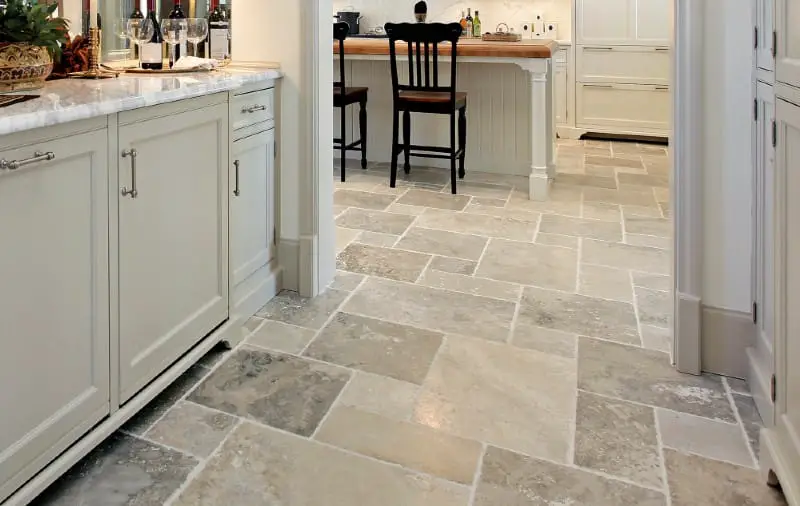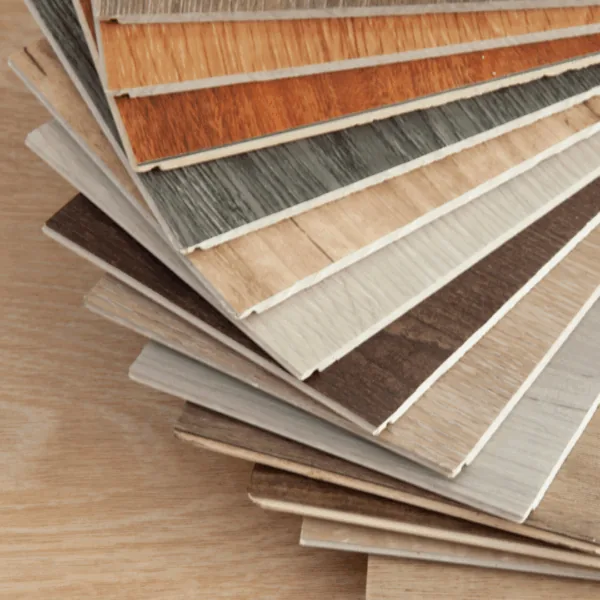
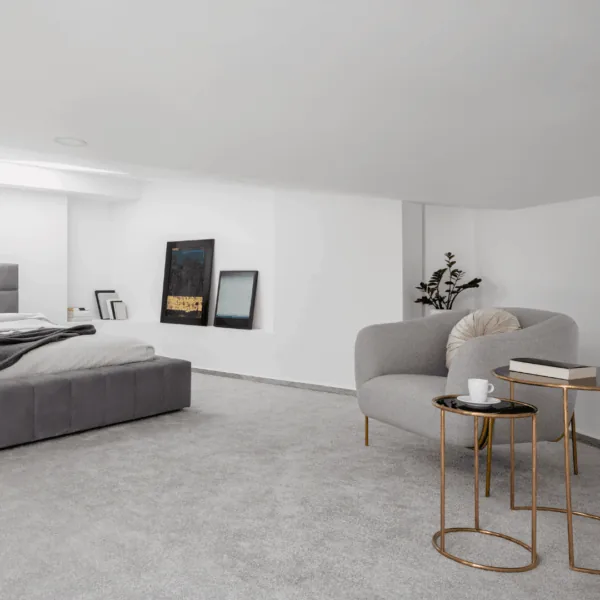
There's no single 'best flooring' - there's the best flooring for each room, based on water, traffic, comfort, and how long you plan to stay. Here's the room-by-room cheat sheet we use when customers plan a whole-home project.
| Room | Top Pick | Why |
|---|---|---|
| Living room | Hardwood or LVP | Looks, durability, resale |
| Kitchen | LVP | Waterproof, drop-tolerant |
| Bedrooms | Hardwood or laminate | Warm look; quiet with underlayment |
| Bathrooms | LVP | Fully waterproof |
| Basement | LVP | Waterproof, slab-friendly |
| Entry/mudroom | LVP | Salt, slush, and snow |
| Stairs | Hardwood or LVP | Durable treads with matching stair nose |
Match the Floor to the Life in the Room
Kids, dogs, and a kitchen that doubles as homework headquarters push you toward waterproof, scratch-tolerant floors like LVP. A quiet household with grown kids can lean into the character of hardwood. And in bedrooms, laminate gives you a wood look on a budget, while an area rug adds warmth on cold mornings.
Think in Zones, Not Rooms
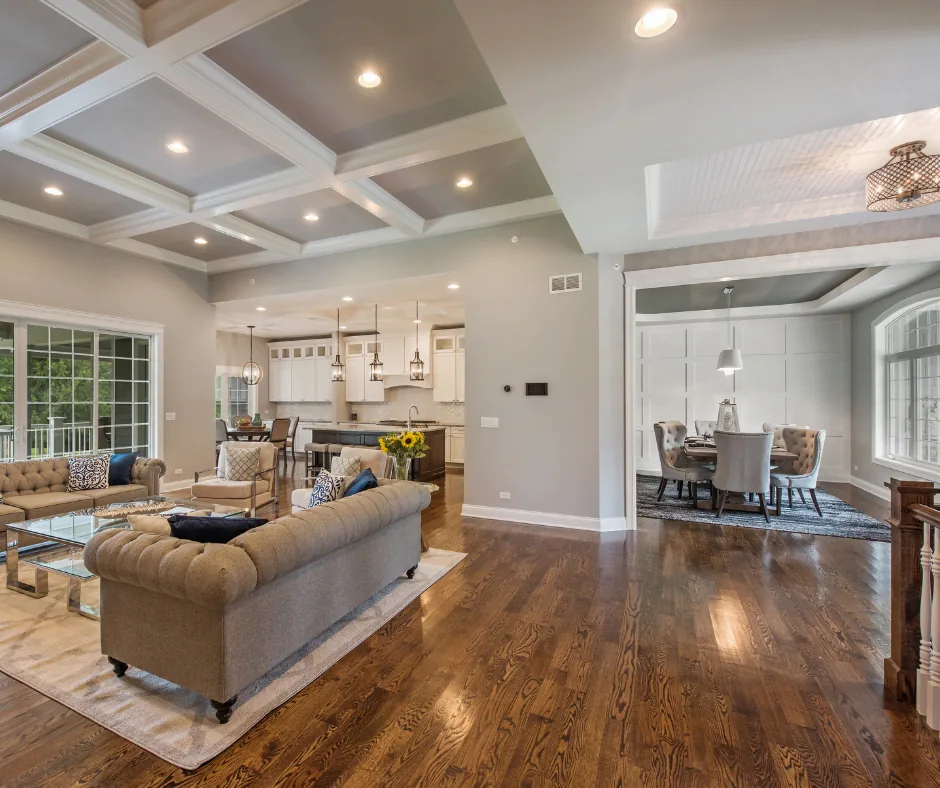
Open floor plans mean the floor flows from kitchen through dining to living room, so the 'rooms' share one floor. Pick for the wettest zone in the run - if the kitchen is part of the great room, the whole space gets a waterproof floor. Transitions between different flooring types work best at natural boundaries: doorways, archways, and changes in direction.
Budget for the Whole Project
When pricing a multi-room project, remember prep and labor don't scale down as much as material does - and moving furniture is part of every quote we write. We itemize everything so you can see exactly where the money goes, room by room.
Plan your whole home in one visit
Schedule your free consultation